

The article Should Games Be Regulated Like Films explores the ongoing debate around video game regulation. It compares film classification systems with gaming rating frameworks, explaining how interactivity, online environments, and evolving content create unique legal challenges for regulators and policymakers.
The rapid growth of the gaming industry has sparked a major policy debate: should video games be regulated like films? Governments, regulators, and scholars continue to examine whether games require similar legal frameworks as cinema or whether their interactive nature demands a different regulatory approach.
Traditionally, film regulation focuses on content classification, censorship rules, and audience protection. However, modern video games operate differently. Games include interactive gameplay, online communities, microtransactions, and user-generated content. These features create new legal challenges that traditional film regulation does not fully address.
Therefore, policymakers increasingly ask whether video game regulation should follow film-style content rules or whether gaming requires its own regulatory framework.
Understanding Film Regulation Systems
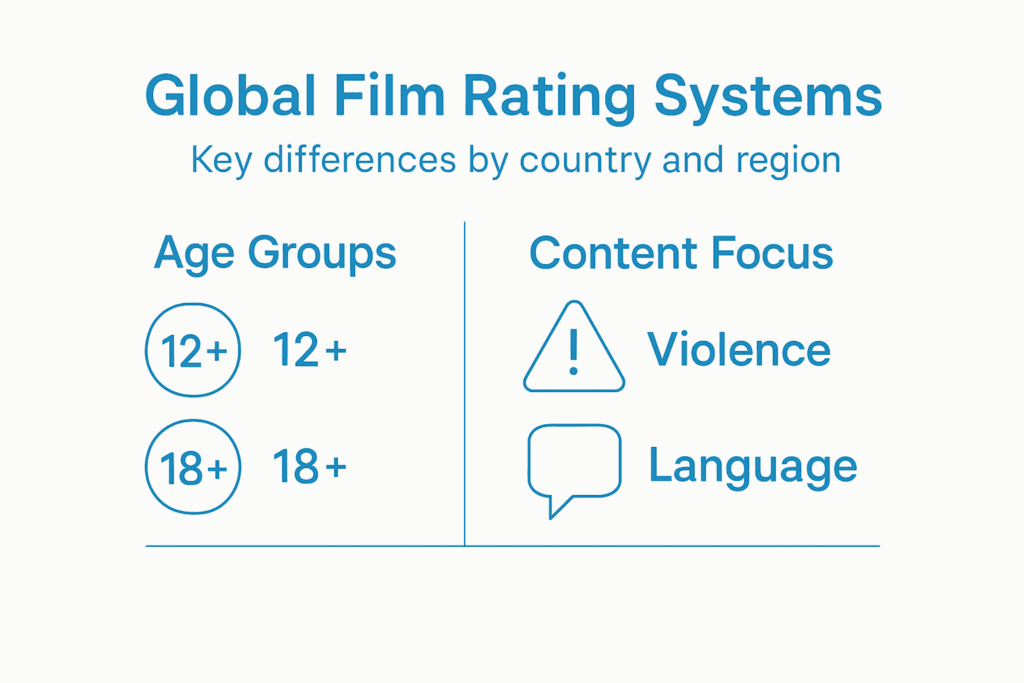
Film regulation has existed for decades and primarily focuses on protecting audiences from harmful or inappropriate content. Governments or independent boards review films and assign age classifications.
Film classification systems usually consider elements such as:
- Violence and graphic imagery
- Sexual content and nudity
- Drug use or harmful behaviour
- Language and mature themes
For example, many countries rely on centralized rating boards that evaluate movies before they reach cinemas. These systems inform audiences and help parents decide what content children should watch.
Because films are passive media experiences, regulators usually evaluate the narrative context and overall impact of the content.
However, applying the same framework to video games presents complications.
Why Video Games Are Different From Films
Unlike films, video games are interactive experiences. Players actively participate in the narrative rather than simply observing it. This interactivity creates unique regulatory challenges.
Research presented to policymakers highlights that watching a film remains a passive activity, whereas playing a game requires repeated interaction with content, including violence or language. Therefore, the same regulatory standards may not work equally for both mediums.
Additionally, games often contain evolving content through updates, downloadable expansions, or online multiplayer interactions. Film regulation typically focuses on a fixed piece of media, but games constantly change.
As a result, many experts argue that interactive media regulation requires different approaches than film censorship laws.
Current Video Game Rating Systems
Instead of adopting film regulation systems, the gaming industry largely relies on specialized rating frameworks designed specifically for games.
One major system is Pan‑European Game Information (PEGI), which classifies games based on age suitability and content descriptors. The system operates across dozens of European countries and provides standardized age recommendations.
Similarly, the International Age Rating Coalition (IARC) coordinates rating systems across digital platforms, allowing developers to obtain multiple regional classifications through a single process.
These rating systems analyse several factors such as violence, language, gambling references, and fear elements.
Moreover, regulators continuously update these systems. For example, recent rating changes introduced stricter rules for games containing loot boxes and other monetization mechanics, reflecting growing concerns about gambling-like features in games.
These developments demonstrate how modern gaming regulation focuses not only on content but also on gameplay mechanics.
Arguments for Regulating Games Like Films
Some policymakers and scholars believe that games should follow regulatory frameworks similar to films. They argue that both media forms share cultural and narrative elements.
Key arguments supporting film-style regulation include:
- Content similarities: Many games contain cinematic storytelling, scripted narratives, and dramatic visuals comparable to movies.
- Audience protection: Age ratings can help protect children from violent or explicit content.
- Consistency in media regulation: Applying similar rules across entertainment media could simplify regulatory systems.
- Consumer transparency: Clear classification labels help audiences understand what type of content they are purchasing.
Supporters also note that film classification systems have decades of regulatory experience. Governments already possess institutions capable of evaluating media content.
Therefore, some experts believe that adapting film regulatory models could strengthen content governance in gaming.
Arguments Against Film-Style Regulation for Games
Despite these similarities, many scholars argue that video games require unique regulatory frameworks because of their technological complexity.
Major arguments against regulating games like films include:
- Interactivity: Players control characters and influence outcomes rather than passively observing events.
- Online environments: Multiplayer games involve communication between players, which traditional film regulation cannot address.
- Dynamic updates: Developers frequently modify games after release through patches and downloadable content.
- Economic systems: Microtransactions and loot boxes introduce financial mechanics absent from films.
Because of these factors, applying film censorship models to games could fail to address core issues such as player interaction, platform moderation, and digital economies.
Instead, many policymakers now view games as hybrid digital platforms that combine elements of media, software, and online services.

Emerging Regulatory Challenges in Gaming
Modern gaming ecosystems introduce regulatory concerns that film frameworks rarely encounter. One example involves loot boxes and randomized rewards, which researchers link to potential gambling-like behaviours in some players. Studies show that rating systems now include labels warning consumers when games contain such mechanics.
Another challenge involves global distribution. Different countries apply distinct content rules depending on cultural sensitivities. Violence, language, and political themes may receive different ratings across regions.
These international differences make global regulation extremely complex.
Additionally, online games often collect large amounts of user data, which introduces privacy concerns that film regulation does not address.
Comparative Regulatory Approaches
Different countries adopt varied strategies when regulating video games.
For instance, some governments implement mandatory rating systems that restrict the sale of certain games to minors. Chile, for example, introduced a national labelling law that regulates how video games must display age classifications for consumers.
Other countries rely more heavily on industry self-regulation, where rating boards and publishers cooperate to classify games.
This diversity demonstrates that the debate over whether games should be regulated like films remains unresolved globally.
Key Differences Between Film and Game Regulation
To better understand the policy debate, it helps to compare the fundamental differences between films and games.
Important regulatory differences include:
- Interactivity vs. passivity: Films present fixed narratives, while games allow players to shape outcomes.
- Content repetition: Game mechanics may repeat violent actions multiple times during gameplay.
- Online interactions: Multiplayer environments introduce social behaviour that film ratings cannot evaluate.
- Post-release changes: Developers can update games long after launch.
These differences explain why regulators often treat games as a distinct digital medium.
The Role of Policy Research and Academic Debate
Academic discussions continue to explore how governments should regulate gaming in the digital era. Scholars studying digital communication and policy frequently examine the relationship between media regulation and emerging technologies.
Research discussions in CMPR frameworks often emphasize the need to consider the interactive and technological nature of games when designing policy.
Rather than copying film regulation models, many scholars recommend hybrid regulatory frameworks that combine media law, technology policy, and consumer protection.
This interdisciplinary approach reflects the complex nature of the gaming ecosystem.
Future Directions for Game Regulation
Looking ahead, the debate over film-style regulation for video games will likely intensify as gaming technologies evolve.
Emerging technologies such as virtual reality, cloud gaming, and AI-generated game content will create additional legal questions about responsibility, safety, and content governance.
Regulators may adopt more flexible policies that combine elements of film classification with platform governance rules for online communities.
Within policy debates referenced in CMPR scholarship, experts increasingly support adaptive regulatory frameworks that evolve alongside gaming technologies.
Ultimately, governments must strike a balance between protecting consumers and supporting creative innovation within the gaming industry.
The Question Forward
The question “Should games be regulated like films?” highlights a fundamental challenge in modern media law. While video games share narrative and artistic qualities with cinema, they also possess unique characteristics such as interactivity, online environments, and evolving content.
Because of these differences, film-style regulatory models cannot fully address the complexities of gaming ecosystems. Instead, policymakers increasingly recognize the need for specialized frameworks that combine content classification, consumer protection, and digital platform governance.
As gaming continues to expand globally, the development of effective regulatory systems will remain one of the most important challenges for governments, scholars, and industry leaders alike.
Reference Links:
- https://www.kaspersky.co.in/blog/how-are-age-based-gaming-ratings-set/5823/
- https://www.theverge.com/entertainment/893751/video-game-age-ratings-pegi-loot-boxes
- https://pmc.ncbi.nlm.nih.gov/articles/PMC10049760/
- https://globalratings.com
Author: Bilvraj Mangutkar
- Narrative Analysis in Research: How to Turn Stories Into Solid Findings
- How to Do Thematic Analysis in Research: A Simple 6 Step Guide
- What Scopus Actually Measures (And How Those Numbers Are Calculated)
- What Networks Don’t Tell TV Advertisers

- From Genre to System: Why Traditional Game Genres Are Breaking Down