

The article National Game Industries and Cultural Policy examines how governments support game development beyond subsidies. It explores policy tools such as education programs, innovation funding, infrastructure development, and cultural promotion that help build sustainable national gaming ecosystems and strengthen the global competitiveness of digital creative industries.
Over the past decade, governments around the world have begun to recognize the cultural and economic importance of video games. As a result, many countries now treat the gaming sector as part of their creative industries policy. However, state support for gaming goes far beyond simple financial aid. Governments increasingly build ecosystems that support talent development, cultural expression, infrastructure, and international visibility.
Consequently, discussions about national game industries and cultural policy now focus on how states can create sustainable gaming ecosystems rather than merely providing subsidies. These policies shape how countries develop local studios, support cultural storytelling in games, and strengthen the global competitiveness of their digital creative sectors.
Furthermore, researchers studying game industry policy frameworks often highlight how governments use cultural strategies to nurture local game industries and promote national identity in digital media.
The Cultural Significance of National Game Industries
Video games have become an important cultural medium alongside film, music, and television. Therefore, many governments include gaming within their broader cultural policy for digital media industries.
For example, some governments view video games as cultural exports that can promote national identity and creativity. In Poland, cultural programs and research funding have supported domestic game development as part of a strategy to strengthen the country’s creative industries.
Similarly, several countries have begun integrating gaming into national creative industry strategies. These initiatives often include support for research, cultural storytelling, and international promotion of locally produced games.
As a result, policymakers increasingly recognize video game cultural policy as a critical component of modern media ecosystems.
Beyond Subsidies: The Broader Tools of State Support
When discussing government involvement in gaming, people often focus on direct subsidies or tax incentives. However, cultural policy scholars emphasize that effective state support involves multiple strategies.
Governments often support national game industries through several policy tools:
- Education and talent development programs that train future game developers.
- Industry incubators and accelerators that help startups scale internationally.
- Research and innovation funding for game technology and digital storytelling.
- International promotion programs that showcase local games at global events.
- Infrastructure development such as technology hubs or gaming clusters.
These policies help create long-term ecosystems rather than short-term financial support.
Talent Development and Education
One of the most important ways governments support gaming industries involves education and skill development. Game development requires expertise in programming, design, art, storytelling, and sound production.
Many countries therefore invest in game development education programs within universities, technical schools, and creative training institutions.
For instance, some government-backed institutions collaborate with universities to support talent development and partnerships between academia and industry. In Denmark, the government established NIMBI GameLab to promote Danish game development, support education initiatives, and foster collaboration between industry and researchers.
Such programs strengthen the long-term sustainability of national game industries by ensuring a steady pipeline of skilled professionals.
Infrastructure and Creative Clusters
Another key element of national gaming industry development involves infrastructure. Governments often create technology hubs, coworking spaces, or innovation clusters where game studios can collaborate and share resources.
These clusters typically provide access to development tools, mentorship programs, networking events, and venture capital connections. Public-private partnerships frequently support these ecosystems.
For example, some governments have funded gaming innovation hubs that bring together startups, universities, and established studios to encourage collaboration and innovation.
These initiatives demonstrate how creative industry infrastructure policy can accelerate the growth of local gaming sectors.

Regulatory and Cultural Frameworks
Cultural policy also influences how governments regulate gaming content and protect cultural values.
Some countries implement national game rating systems that ensure games align with social norms or protect younger audiences. For instance, Indonesia created a national game classification system administered by the Ministry of Communication and Digital to regulate interactive digital games.
Similarly, certain governments maintain cultural institutions dedicated to gaming. In Iran, the Iran Computer and Video Games Foundation operates under the Ministry of Culture and Islamic Guidance and supports domestic game production while also overseeing aspects of regulation and cultural guidance.
These frameworks illustrate how gaming policy intersects with cultural regulation and national media governance.
Innovation and Research Support
Innovation policy also plays an important role in developing national game industries. Governments frequently invest in research programs that support technological advancements in gaming.
Research grants often support areas such as:
- Artificial intelligence for games
- Virtual reality and immersive media
- Game design tools and engines
- Interactive storytelling technologies
By supporting innovation, governments encourage studios to experiment with new ideas and remain competitive in the global market.
Such initiatives strengthen game technology research ecosystems, which are essential for maintaining industry growth.
Key Elements of Successful Cultural Policy for Games
Successful national gaming strategies usually combine multiple forms of support rather than relying on a single policy tool.
Effective cultural policy for game industries often includes:
- Education initiatives that integrate game development into academic programs.
- Industry accelerators and incubators that help startups grow and attract investors.
- Government-backed institutions dedicated to game development and research.
- Cultural promotion programs that support local storytelling in games.
- Regulatory frameworks that guide industry standards and consumer protection.
Together, these policies create sustainable environments for game studios and developers.
Global Competition in the Gaming Industry
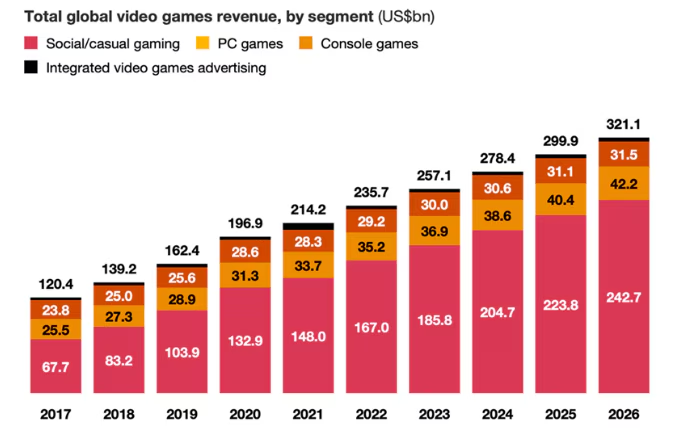
As the global gaming market continues to expand, governments increasingly compete to attract studios and investment. Countries recognize that successful gaming industries generate jobs, innovation, and international cultural visibility.
Consequently, national strategies now focus on building competitive game development ecosystems rather than relying solely on direct funding.
Some governments also host industry events, awards programs, and conferences that promote local developers and attract international attention.
These initiatives strengthen national reputations within the global gaming industry.
Policy Debates and Academic Perspectives
Academic discussions about national game industries and cultural policy frequently appear in media studies and digital communication research. Scholars analyze how governments influence creative industries through cultural funding, regulation, and institutional support.
Within policy discussions referenced in CMPR research, scholars emphasize that gaming should be treated as a cultural medium rather than merely a technological product.
This perspective encourages policymakers to view game development as part of broader cultural ecosystems that include film, animation, and digital art.
By recognizing gaming as a cultural industry, governments can design policies that support creativity, cultural storytelling, and innovation simultaneously.
The Future of Cultural Policy in Gaming
Looking ahead, national governments will likely continue expanding support for gaming industries. Emerging technologies such as virtual reality, augmented reality, and cloud gaming will further increase the strategic importance of the sector.
Future policies may focus on strengthening digital creative economies, supporting independent developers, and encouraging culturally diverse storytelling in games.
As gaming becomes one of the most influential cultural industries of the digital age, governments will increasingly integrate gaming into broader creative economy strategies.
In Conclusion
The development of national game industries requires far more than financial subsidies. Effective cultural policy combines education, infrastructure, research support, regulatory frameworks, and international promotion. By adopting comprehensive game industry policy frameworks, governments can create thriving ecosystems that support creativity, innovation, and economic growth.
Ultimately, understanding national game industries and cultural policy helps policymakers and researchers examine how digital media industries evolve within modern cultural and economic systems.
Author: Bilvraj Mangutkar
- Narrative Analysis in Research: How to Turn Stories Into Solid Findings
- How to Do Thematic Analysis in Research: A Simple 6 Step Guide
- What Scopus Actually Measures (And How Those Numbers Are Calculated)
- What Networks Don’t Tell TV Advertisers

- From Genre to System: Why Traditional Game Genres Are Breaking Down